


Some packages arrive quickly. Some delivery services act as if Hoorn is only accessible via a mountain pass and a donkey.
The new Golden Fleece drum carder had already spent quite some time in the ‘checking the tracking app every five minutes’ phase before it finally arrived in the studio. But one morning, the box was there after all. And then things moved fast.
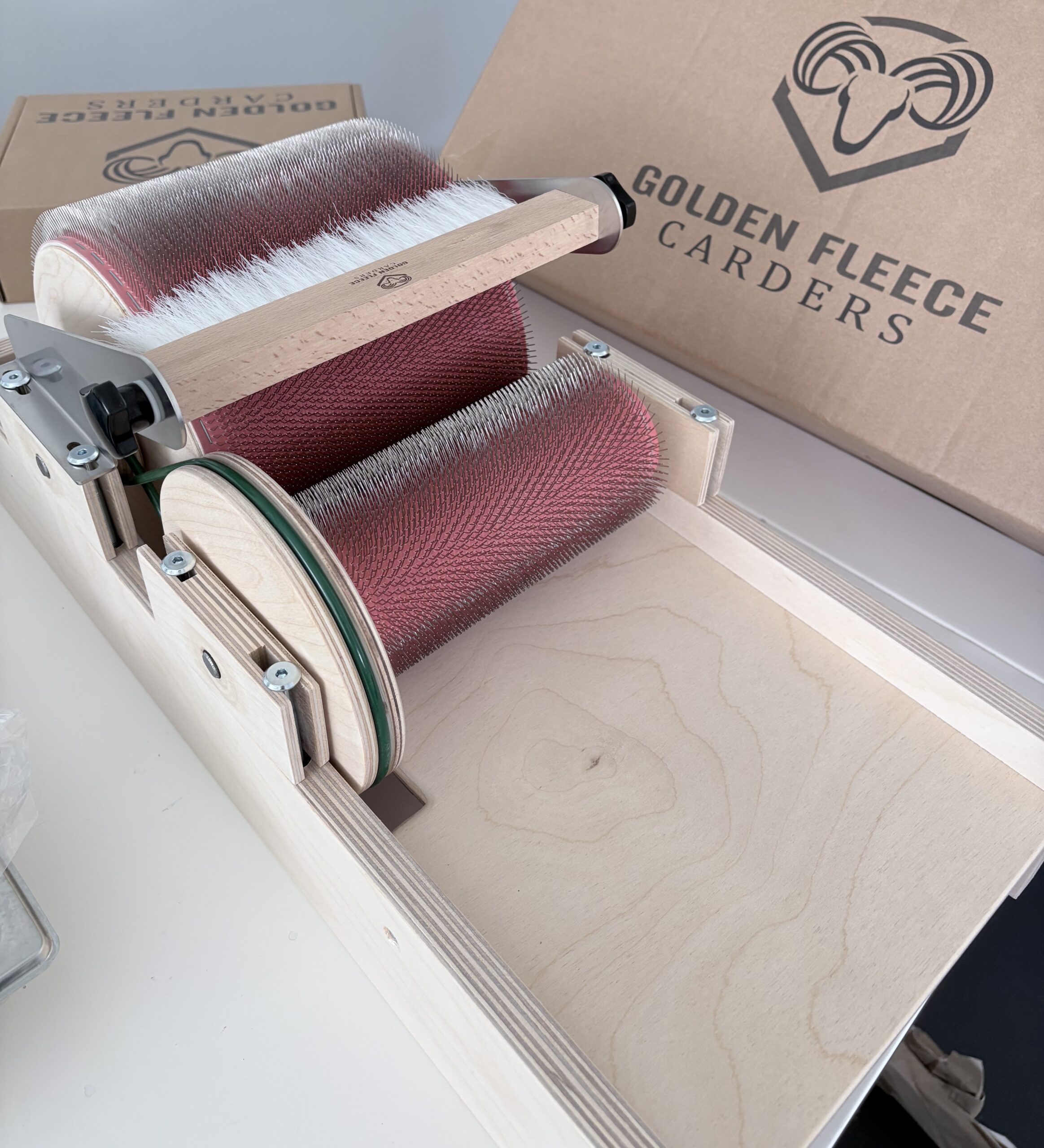
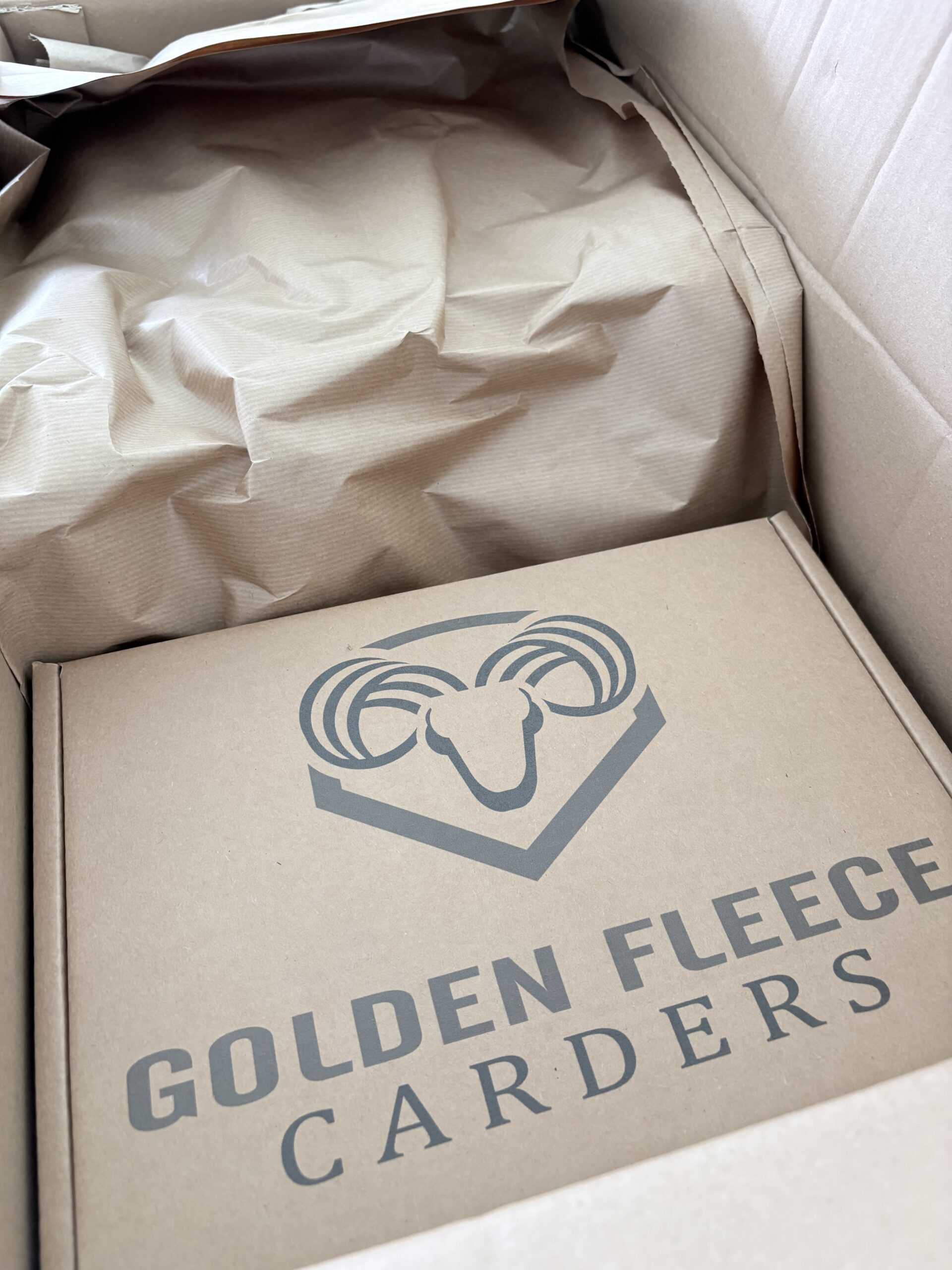
The parts were carefully packed. There was a handwritten note, a tea bag, and chocolate. Small things, but just enough to notice that this wasn’t just any package from a warehouse. It was only when I happily showed everyone the packing slip and the gift bag that I got the reaction; ‘Um, yeah, don’t you always do that with your packages?‘ Yes, indeed, I hadn’t really thought about it. Sometimes it takes someone else to remind you that what feels perfectly normal to you can be something quite special to someone else.
Two carders, two roles
The new Golden Fleece isn’t replacing the old drum carder. That one is staying right where it is.
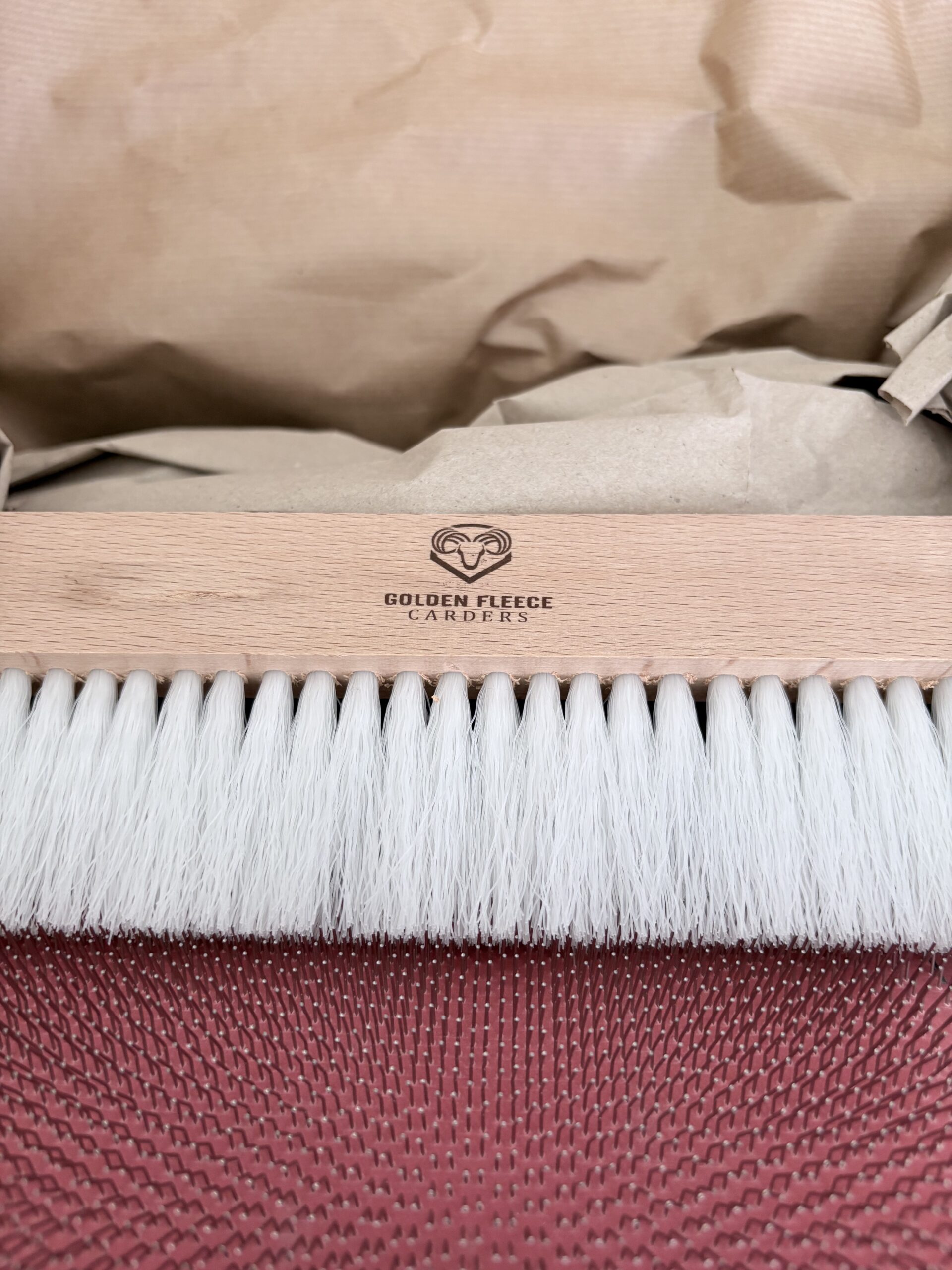
The existing carder has a 56 TPI cloth; the new one has 120 TPI. The new one offers more room for fine fibers and more refined blends. The old one remains great for airy, distinct textures. It’s not a case of ‘out with the old, in with the new.’ They both have a job to do.
That was actually enough technical talk for one day. After that, wool had to go through it.
No gentle introduction
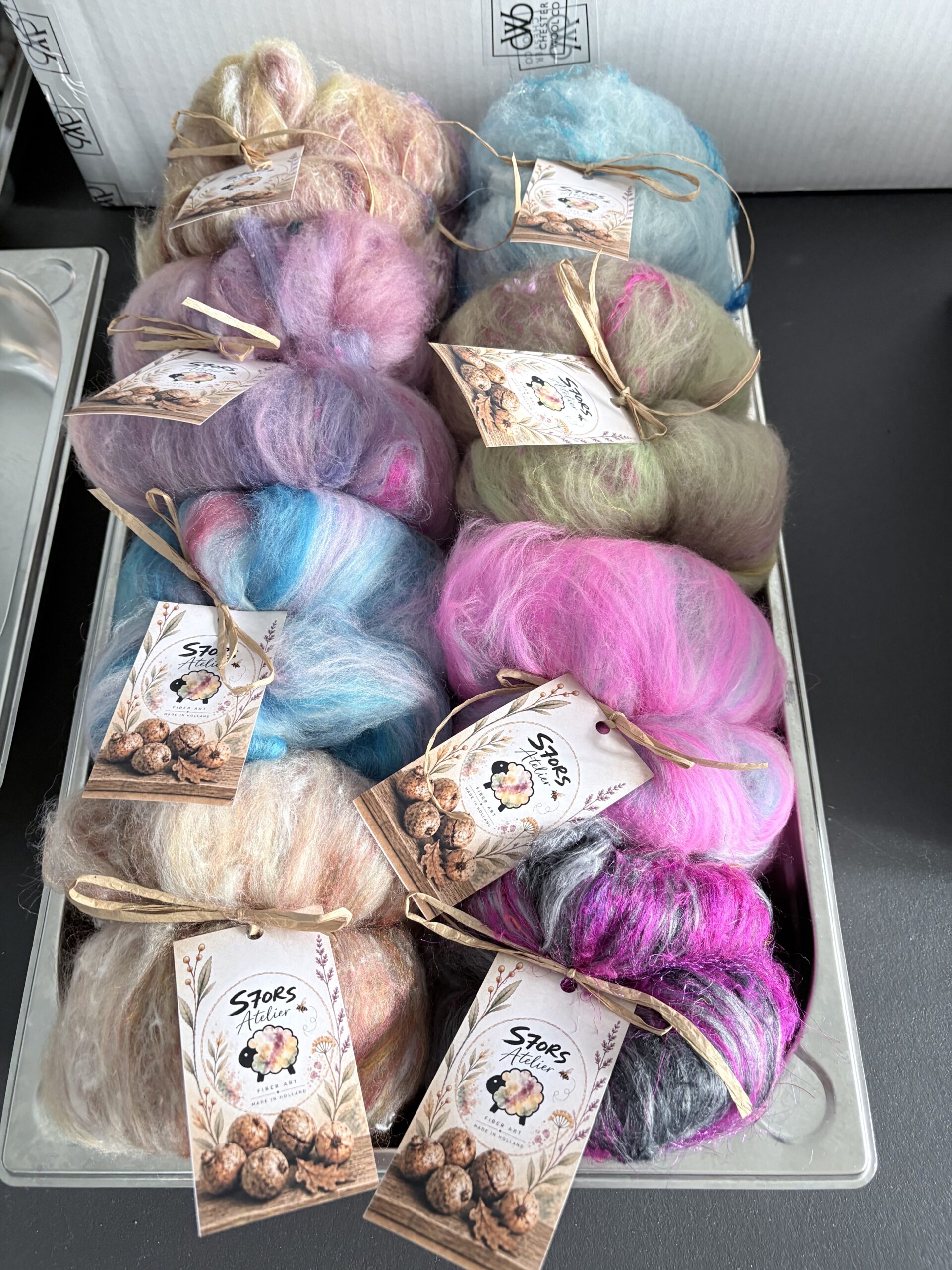
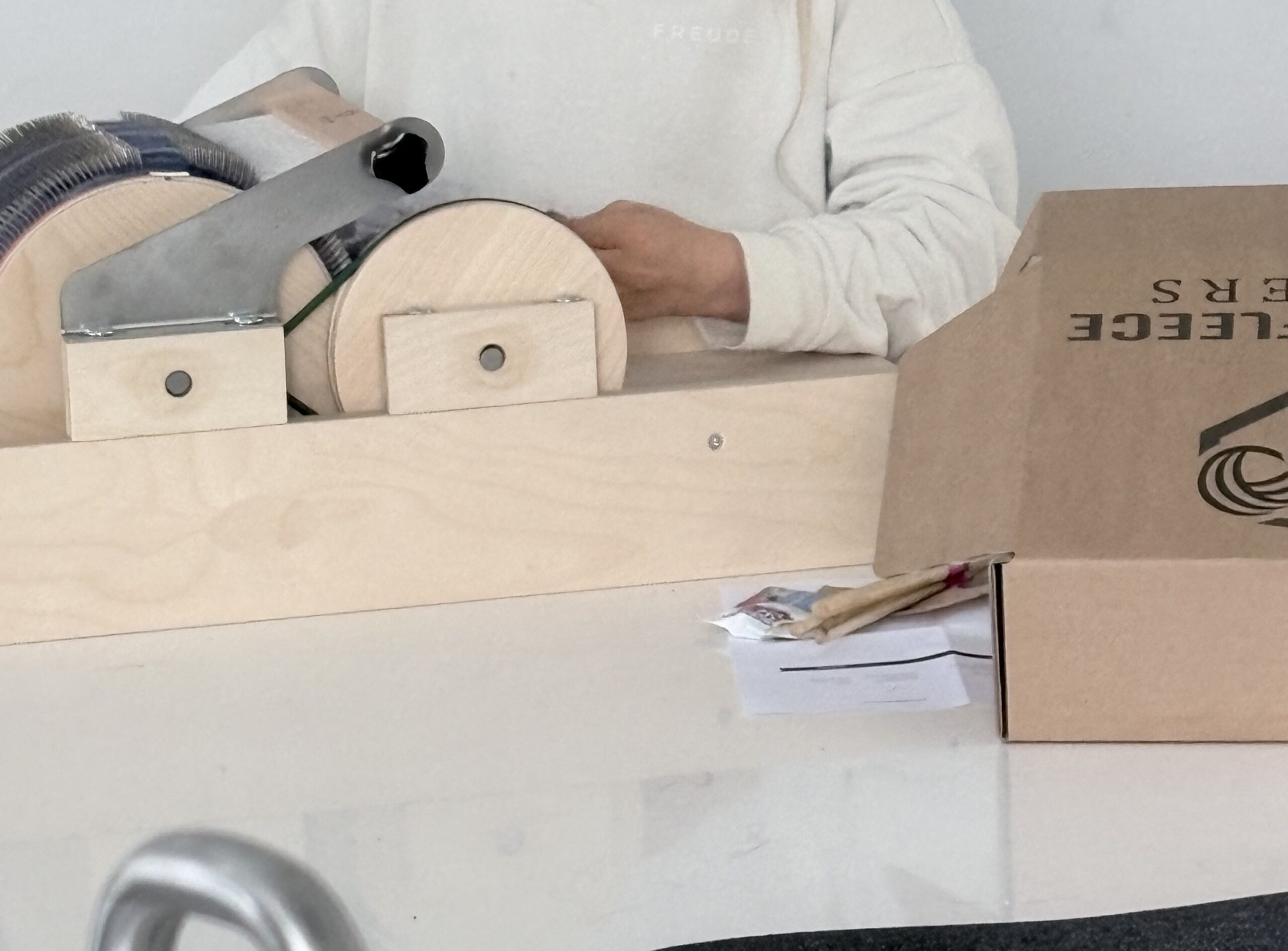
The Golden Fleece didn’t get a gentle introduction. The box went into the corner, the handle was fitted, and before I knew it, the afternoon was over. In the meantime, almost without noticing, nine batts had been made.
The first eight formed a varied but cohesive series of S7oRS Art Batts for the market. Different fibres, colours, and textures side by side: enough to immediately see what the finer cloth does with different fibers and blends.
By the end of the day, the handle already felt well broken in. Not because an elaborate testing procedure, but simply by turning it, looking, turning it again and feeding wool trough the carder. That’s usually how new tools earn their place here. Before long, they simply feel as tough they’ve always been part of the workshop.
Before Mum Secretly Sells It
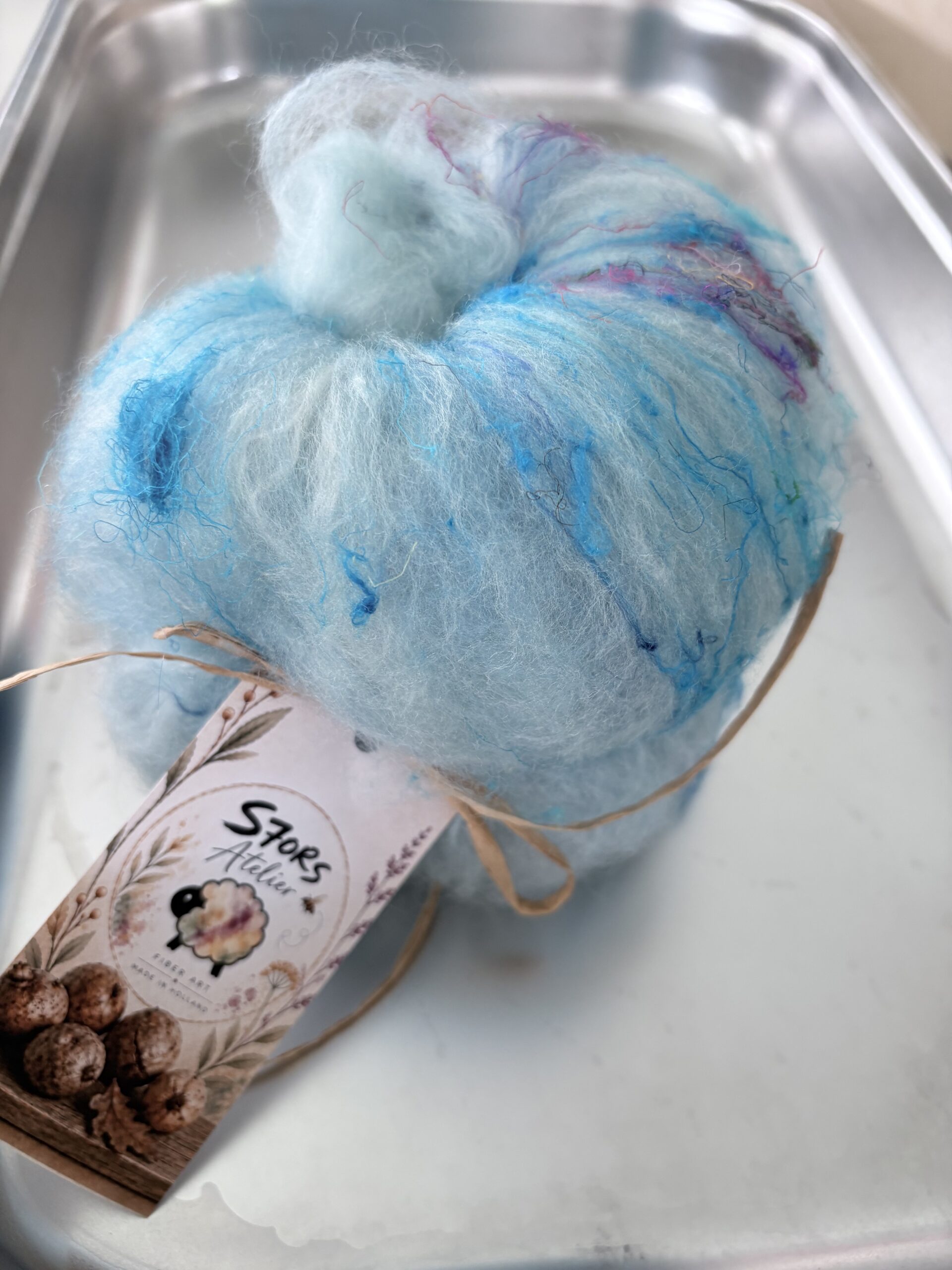
The ninth batt belonged to Floortje.
Floortje always wants to do everything herself, so naturally, that’s exactly what happened. I warned her that the carding cloth was sharp, which mostly earned me a few eye rolls. ‘Yeah, DUH! I can see the warning sticker too, mom.’ Floortje chose a tuft of blue roving and silk, turned a batt as if she does it every day, and quickly took her batt to her room. ‘Otherwise you’ll secretly sell it.’ She knows her mother well enough by now.
Of course I’m not selling her batt. I’ll spin it for her and then Floortje can knit something from it. The division of labor sorted itself out remarkingly quickly.
Sjors, eleven and almost twelve, had been following everything closely from a distance. When the tray was full, he came to take a look. He had a different assessment of the batts. He mainly wanted to cuddle them. That too is a form of quality control, although it probably isn’t in the manual.
Rick looked at the carder, the batts, the children, and the mess in the studio and said with a grin:
‘You’re all absolutely crazy.’
He wasn’t wrong.
A studio is not a museum
At the start of the day, the new drum carder was still in a box. By the end, nine batts had been made and one was safely hidden away in a bedroom, well out of reach of its supposed future seller.
That’s how it goes here. Tools don’t need to be admired for a few weeks first. They are used, tested, shared, and sometimes immediately claimed by someone with their own plan.
A studio doesn’t thrive on things staying tidy. It thrives on wool on the table, people getting involved, and tools that forget they were ever new on the very same day.