


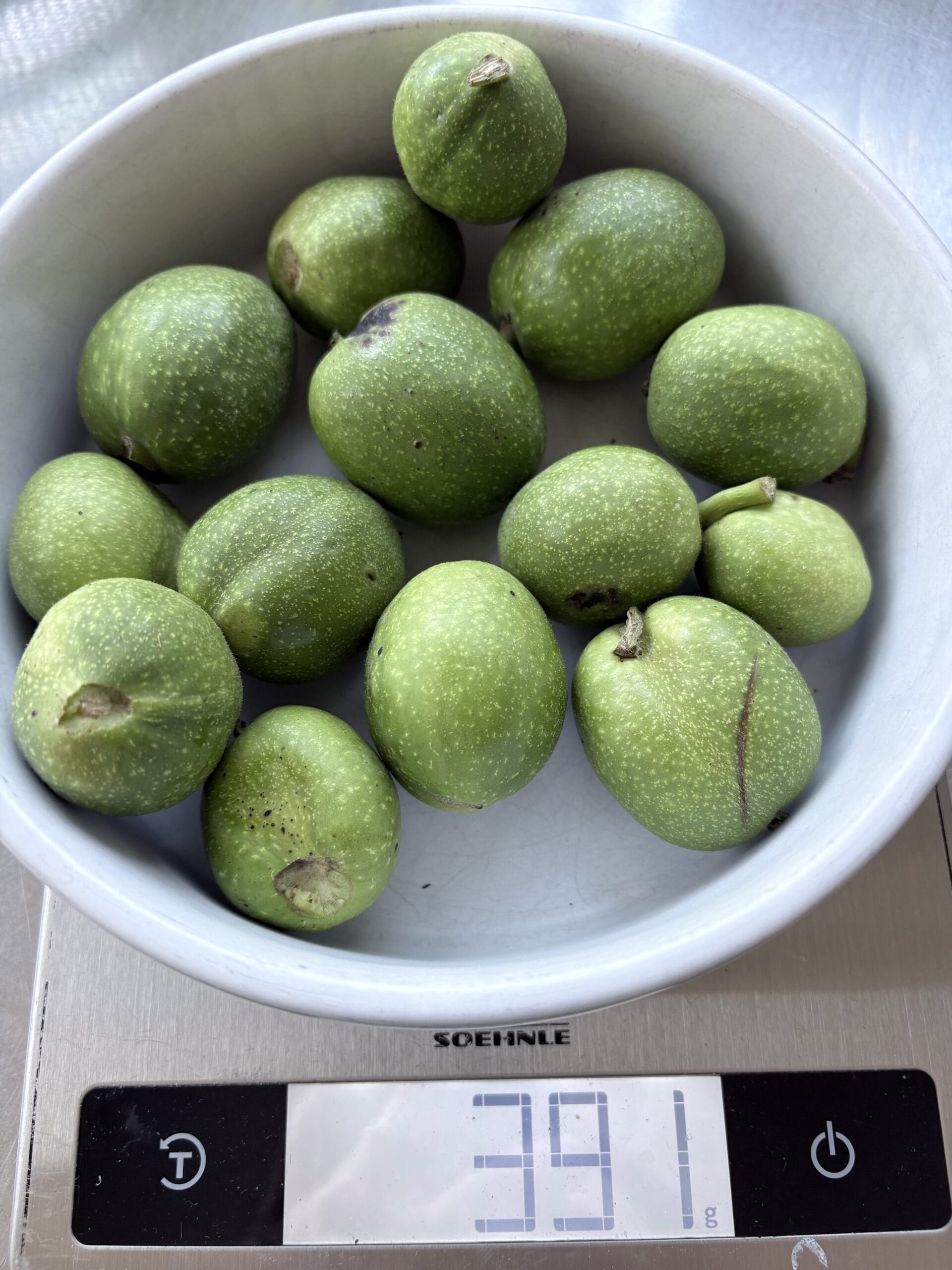
A bowl of fresh green walnuts from my parents’ garden in Bakhuizen was the start of this experiment. No big plan, just 391 grams of walnut including the hull, a vegetable net from Albert Heijn, and the question of what happens when the same dye ends up on different fibres.
Green nuts, dark bath
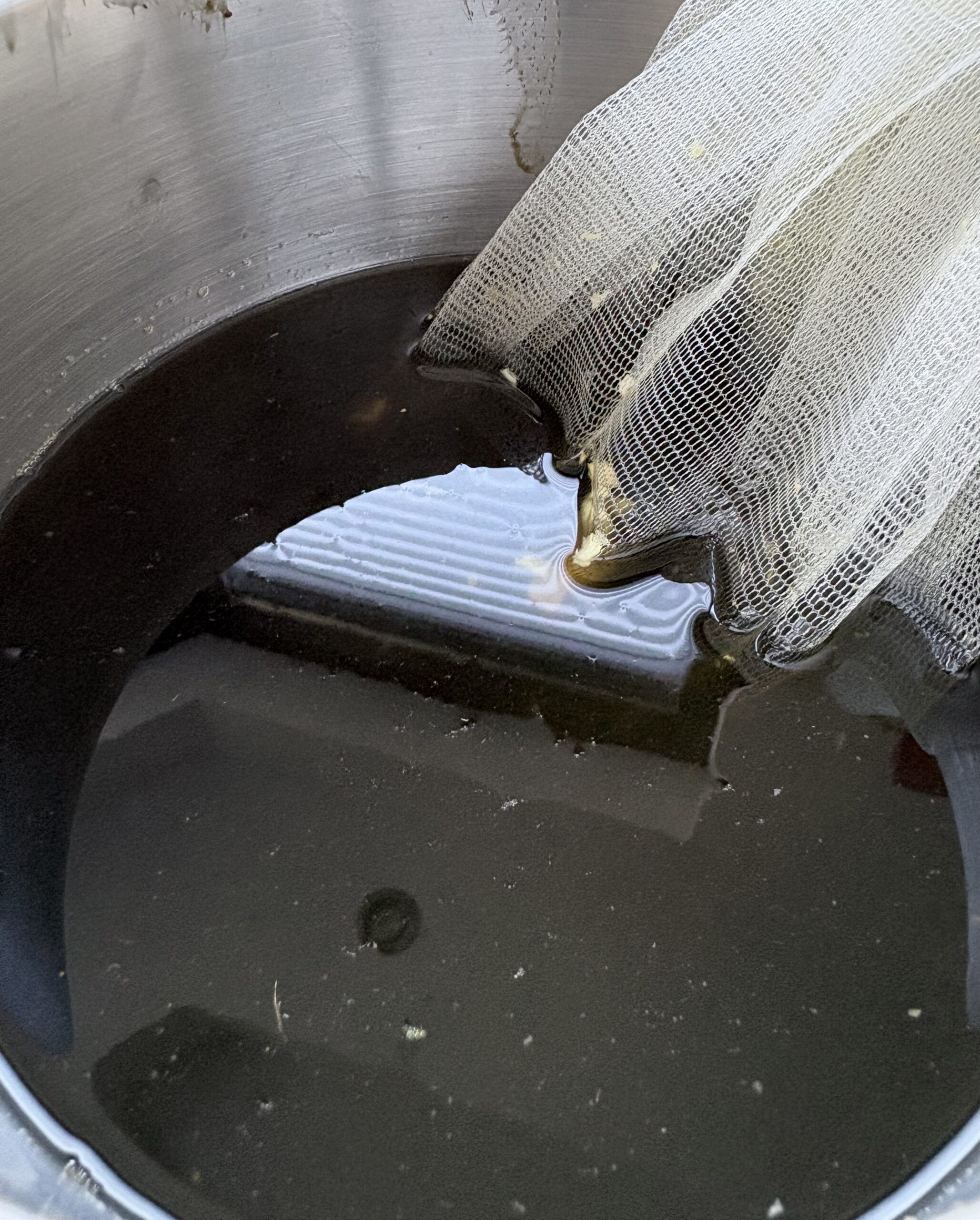
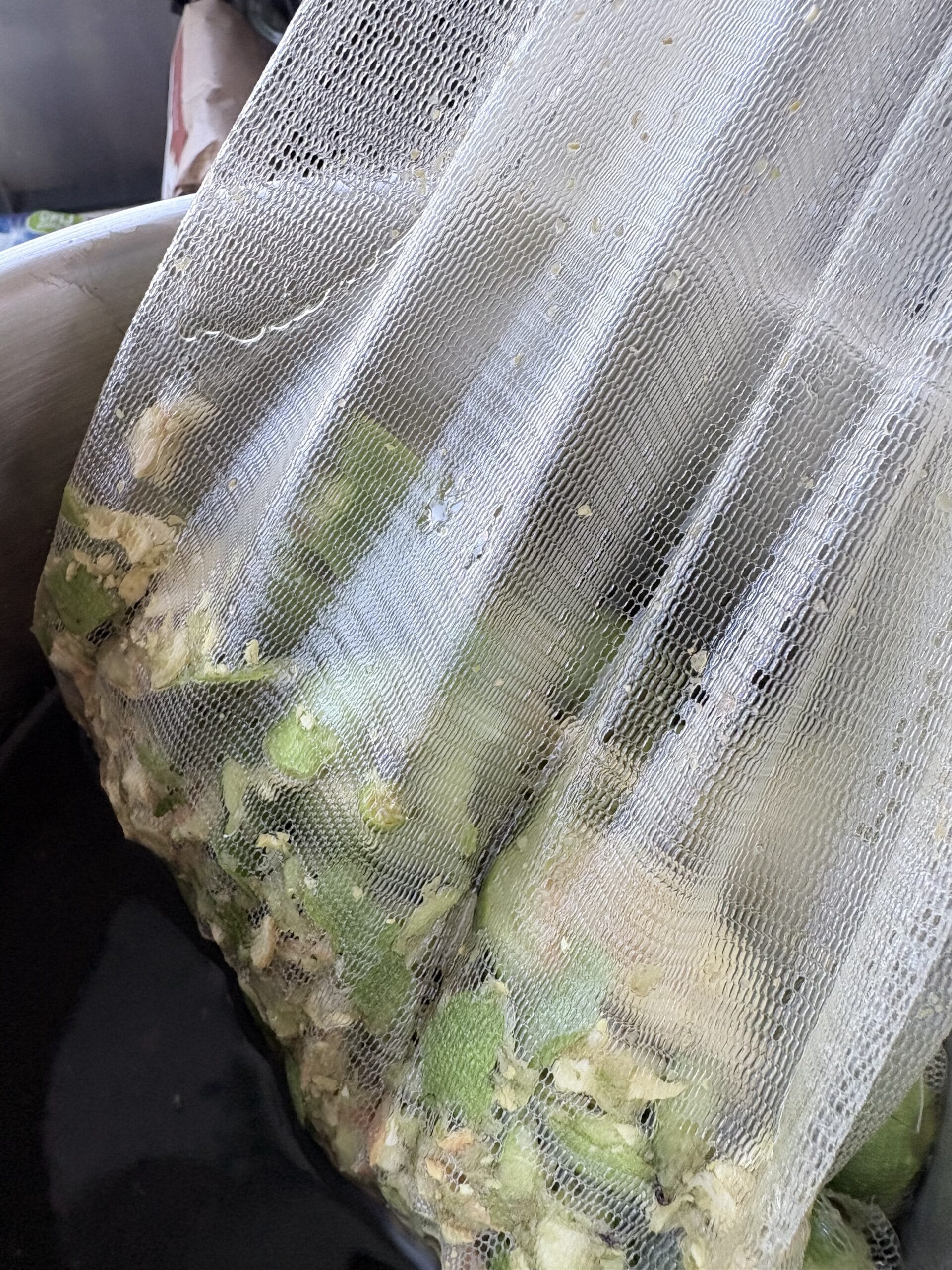
The walnuts were still green and fresh; a few already had dark spots or a bursting hull. After bruising them (basically smashing them with a hammer), they went into the net for a night in cold water. That net kept the pieces together and just let the dye do its job. That’s handy, because I don’t fancy picking pieces of hull out of the wool afterwards.
The colour came quickly. First the water turned a light yellow-green, then olive brown, and within about half an hour very dark brown, almost black. The green hulls largely stayed green. The bath clearly had no need for a uniform corporate identity.
The base paints along
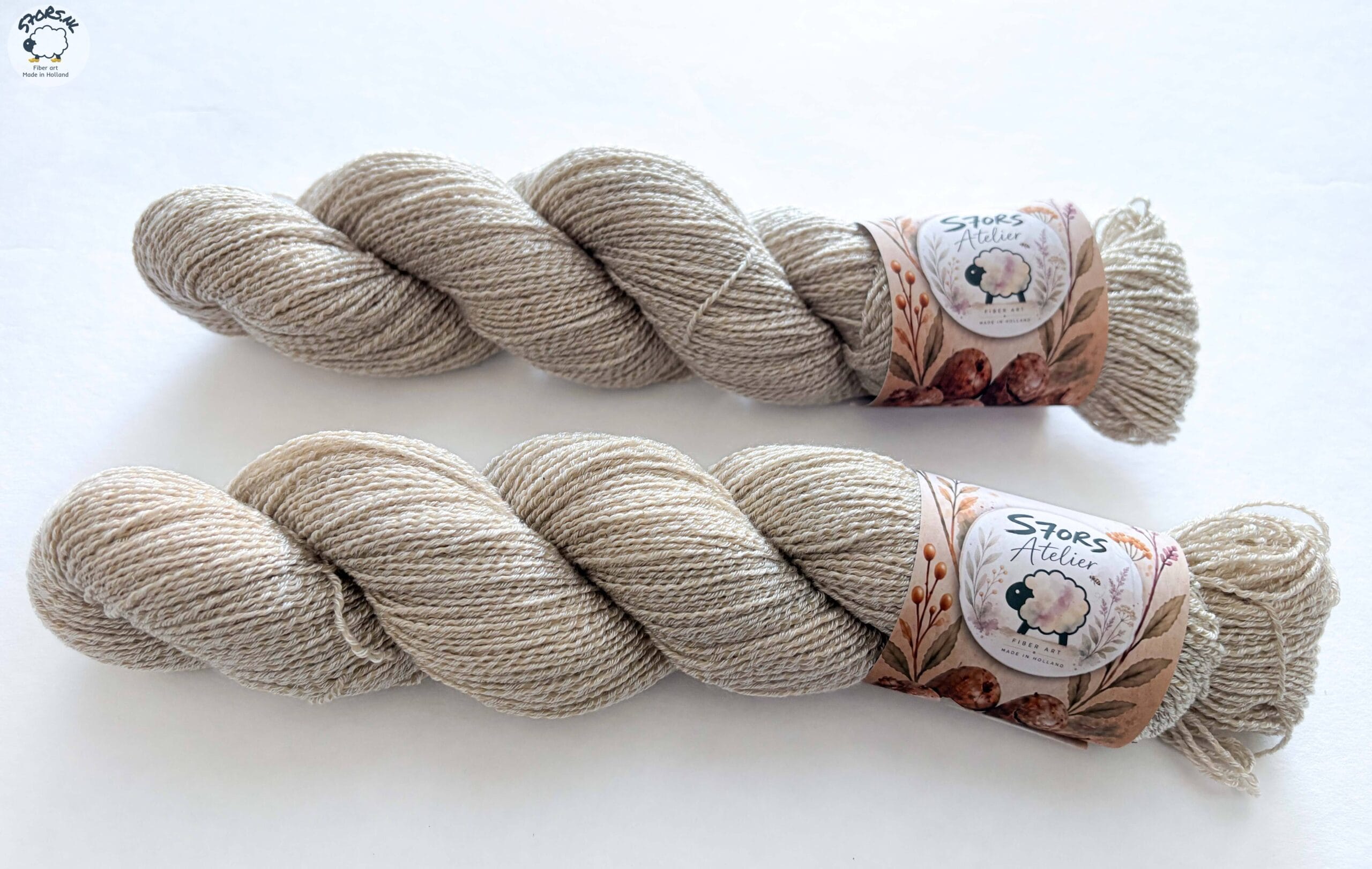
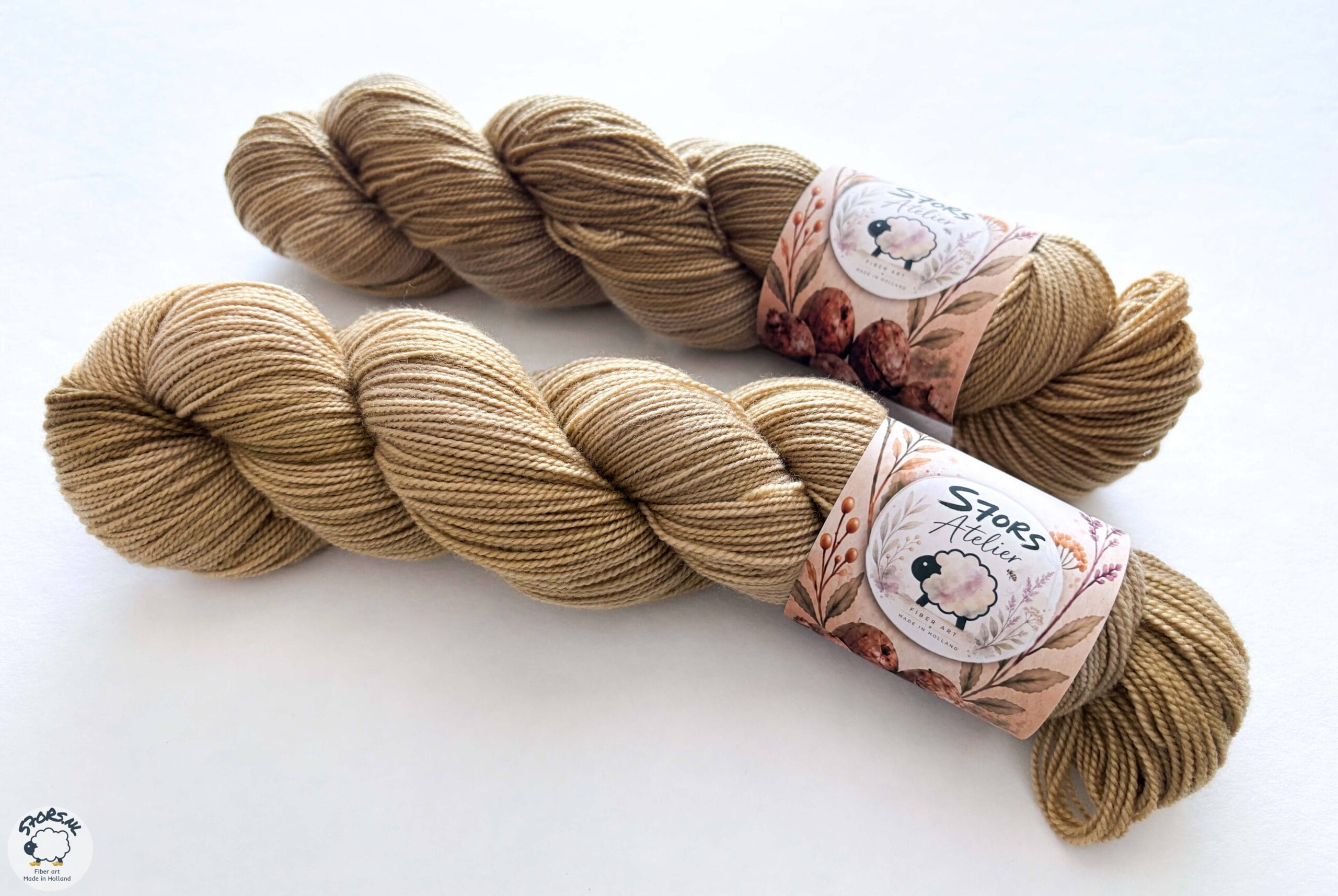
After drying, the extract gave a warm, light chestnut colour on 100% merino. The Vegan Sock blend became distinctly sandier and less warm. Up close, it does contain small honey and gold-coloured bits. So the thread isn’t flat in colour; it gets more interesting when you take a closer look.
The evenness also differed from earlier tests with logwood and oak galls. The walnut gave more natural variation and the difference between the fibres remained visible. The base turned out not to be a neutral carrier here, but a participant with its own opinion.
A small case of control
In the cold extraction phase, the nylon net didn’t visibly take on any colour, even though the bath quickly turned dark. Even after heating, the net stayed white. Curiously, the nylon in the Vegan Sock did take on colour. That’s exactly the kind of detail for which a test batch is more useful than a firm conclusion.
What have I learned?
Natural dyeing with walnuts didn’t yield a one-to-one colour here, but a small comparison: warm light chestnut on merino, sandier and subtly mottled on the Vegan Sock blend. The next question isn’t which skein is the winner. The next question is what the same walnut decides to do on a different base. Fortunately, the walnut tree will be in Bakhuizen for a while yet.