


Since 12th August, new European packaging regulations have been in effect. The goal is clear: less packaging waste and ensuring producers contribute to its processing. However, implementation has proven quite complicated for small online shops. Anyone sending a few skeins of wool from the Netherlands to a customer in another EU country can suddenly face registrations, national systems, and administrative obligations in that country.
For S7oRS, this week meant dropping everything and figuring out exactly what is expected of a tiny studio and whether we can even still send our wool to customers across Europe.
A normal workday can take some strange turns. Initially, it seemed these rules only applied to sending 50,000 kilos or more per year. I could already picture it… 50,000 kilos of wool! We’d have to build an extra shed for that. Or a very awkward mountain of boxes. However, it turned out to be about the weight of the packaging… well, then I’m fine, right? So I thought for a moment…
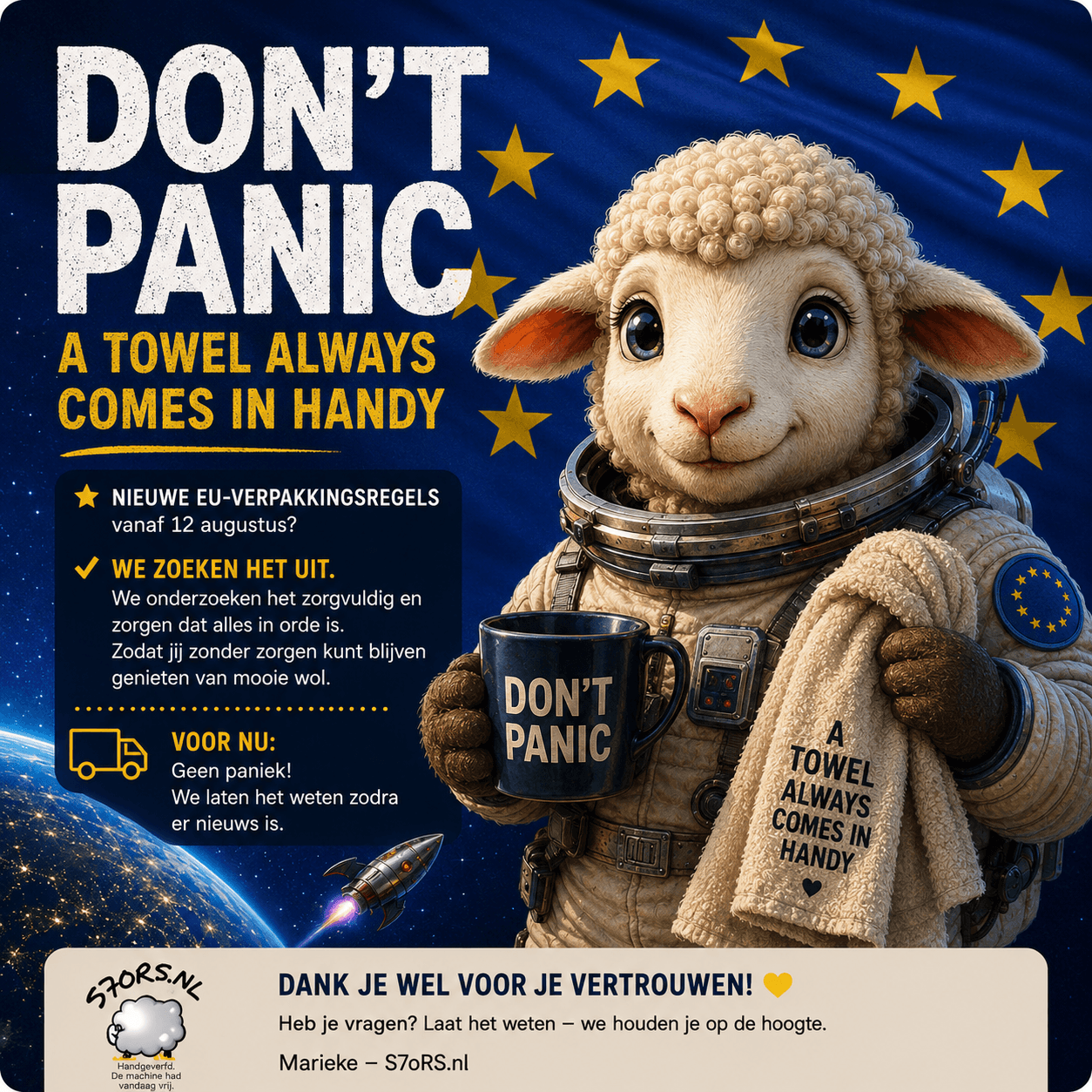
From 50,000 kilos to one box
When researching the new European packaging regulations, it unfortunately soon became clear that the question wasn’t just about a large weight threshold for empty boxes. Anyone selling across borders also has to deal with the national packaging and EPR routes of the countries where parcels end up. To make it even more complicated, this varies per EU member state, and each member state has its own point of contact with associated price tags that, among the providers I encountered, ranged from a few hundred to over a thousand euros per country per year. And it wasn’t always immediately clear what was mandatory, what was a service, and what exactly belonged to the new rules.
A single German box isn’t a customs thriller, but it is an administrative event where even the question of whether, when, and for what a representative is needed, requires a surprising amount of research. You might think, will that representative ceremonially collect the parcel from the airport?
Fortunately not. What did become clear: for Germany, I need to look into LUCID, system participation, and keeping track of packaging volumes, among other things. Terribly boring information, which, according to my common sense, should have been known to the transporter for ages. Yet, I now have to provide this myself, according to the European Regulation on Packaging and Packaging Waste which came into effect on 12th August 2026.
Don’t scream, but do weigh
So there I went. Inventing a number and pretending it was administration didn’t seem wise in this case. I’d rather create a verifiable overview of what actually goes with a shipment: box or envelope, tape, label, and filling. So, the empty shipping packaging simply went on the scales. How many grams does this piece of tape weigh? Apparently, that’s now a studio question.
The environmental goal isn’t the problem. Less unnecessary packaging is a good idea. The clash lies in the scale: a system that makes sense for many international shipments suddenly applies to a micro-online shop with just a few parcels and a sheet of tissue paper. International relations are not, for now, hanging on a skein of merino, but on a spreadsheet.
The panic was already online
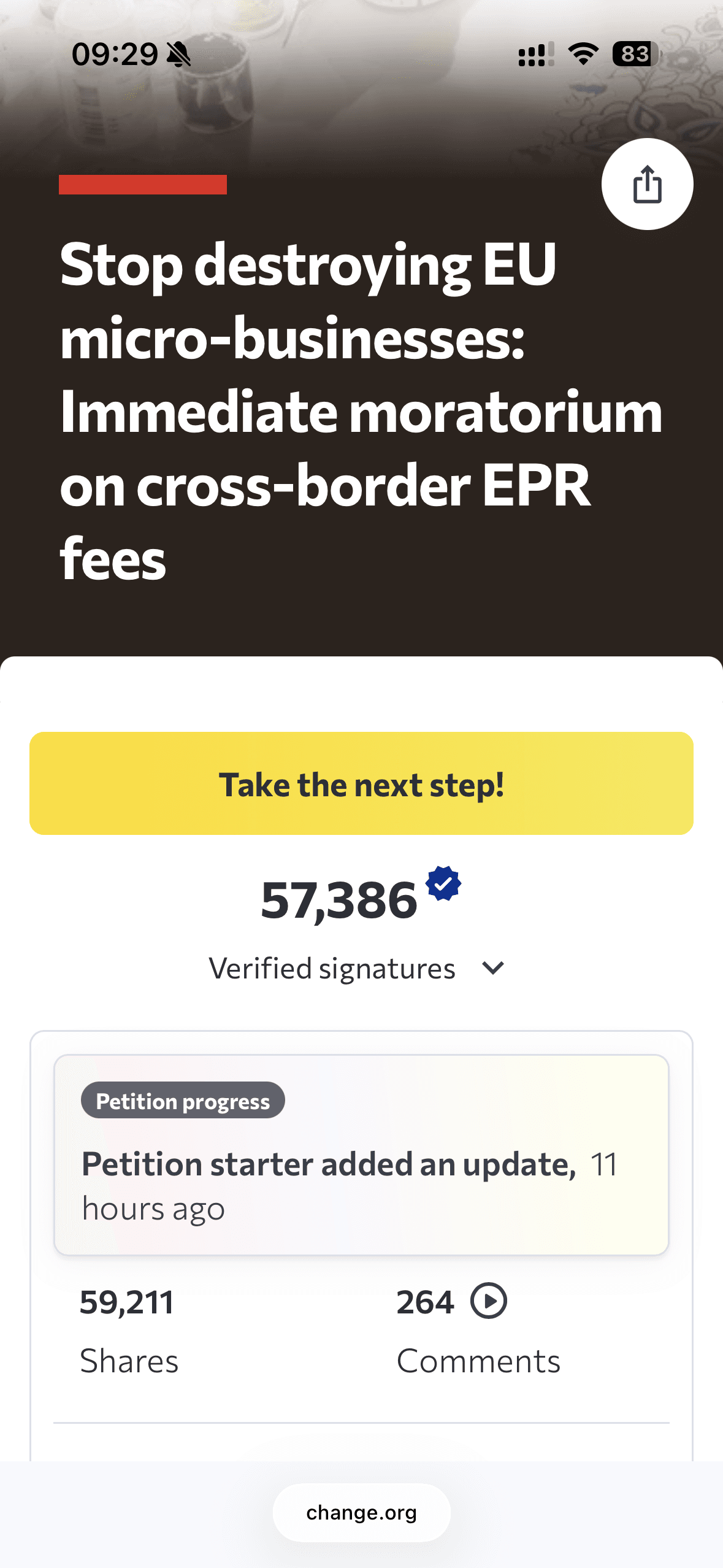
While I was trying to figure out how much tape administratively fits into one box, I was certainly not alone. Instagram seemed to explode! One small online shop after another halted shipping within Europe, petitions were started, and entrepreneurs wondered if they now needed to start a small legal department alongside their online shop. For a moment, I thought my algorithm had gone haywire.
Given that not too long ago I dyed a whole yarn club around a sheep with a towel and ‘Don’t Panic’ on its mug, I decided not to panic immediately. My approach was therefore a little less spectacular: first, find out what actually needs to be done.
With that, I made good progress for Germany. LUCID arranged, packaging on the scales, and the rest on the action list. So, German customers didn’t have to worry: the wool was still there. Germany too. Only the paperwork had multiplied. I’m also well on my way for Belgium.
For the rest of Europe, it remained more difficult. The further I searched, the more points of contact, tariffs, exceptions, and different interpretations I encountered. And somewhere, there comes a point where ‘just figuring it out’ is no longer a responsible way to keep an online shop open.
14th August: the rule was at the doorstep
So, on 14th August, I did something I really didn’t want to do: I disabled a large part of Europe in the online shop.
Not because I no longer want customers there. That’s precisely why it hurt. These are countries where people have been ordering my wool for years. A tick box in WooCommerce can be technically unchecked in a few seconds; the customers behind that tick box, of course, don’t disappear with it.
The Netherlands, Belgium, and Germany remained open. For the other EU countries, the door was temporarily closed until I am sufficiently sure what is expected of me and how I can reasonably arrange it.
That’s not a farewell to Europe. It’s an extraordinarily unpleasant administrative interim status.
DON’T PANIC
So: less packaging? Yes, please. Carefully keeping track of what goes with it? That’s fine too. Meanwhile, I’ll continue to dye, weigh, research, and keep an eye on the news. A towel may not be an official part of the administration, but it’s very handy right now.