

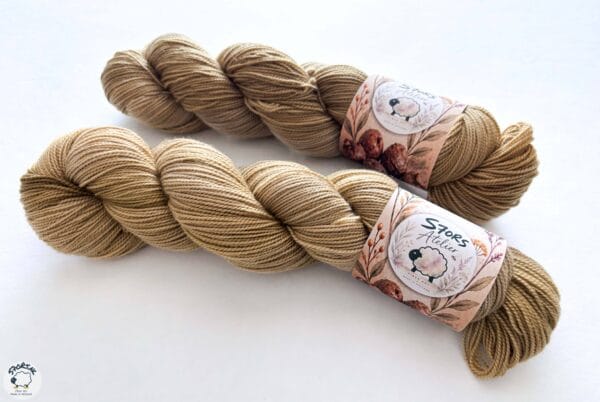
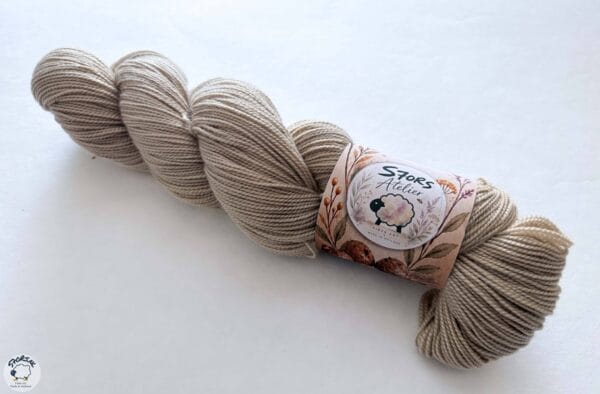
This colour journey began with fresh green walnuts, including their husks, from my parents’ garden in Bakhuizen. After a cold extraction, the bath quickly turned dark brown; on the dry skeins, a much lighter, calm chestnut colour remained. The pot, as usual, had a mind of its own.
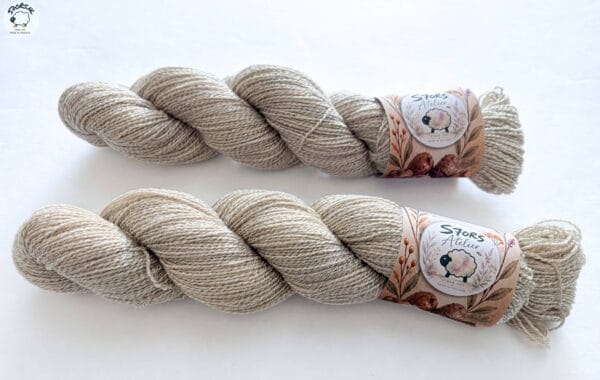
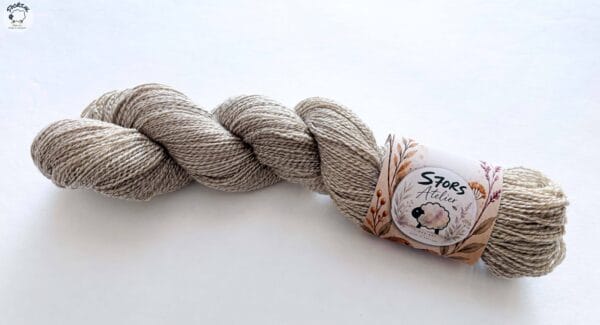
On 100% merino, the colour is a warm, light chestnut brown. The Vegan Sock blend becomes sandier and cooler, with small honey and golden specks up close. Therefore, choose not only by colour, but also by base and dye bath.
Choose your base
- 100% Merino — non-superwash, 100 g, 400 m.
- Vegan Sock — 80% Cupro, 20% Nylon, 100 g, 400 m.
Choose your dye bath
The first and second dye baths come from the same walnut extract, but they don’t yield the same result. A later extract can turn out lighter or a different tone. Not a ‘B-choice’: rather, a different page from the same dye bath.
Natural dye and care
This skein is dyed with natural dyes. These are generally less colourfast than my acid-dye colours. The shade may change with use and light; some colour may bleed during the first washes. Therefore, preferably wash separately or with similar colours, cool or lukewarm, and without prolonged soaking. The behaviour varies per dye, fibre, mordant, and dye bath.
The photo belongs to this batch. Small differences in handmade items and natural dyes are normal.




Reviews
There are no reviews yet.